

Teeth whitening begins with an examination and cleaning. The starting shade is then measured, the gums are protected with a barrier and a peroxide-based gel is applied to the teeth. The gel is usually renewed in 2–4 cycles with blue-violet light. Finally the gel is removed and the shade is measured again. A session usually takes 45–90 minutes; dark-coloured foods and drinks are avoided for the first 48 hours.
How is teeth whitening done? A quick summary
Teeth whitening is a procedure carried out at the clinic by a dentist in a set order, made up of preparation, application and check stages. On this page we describe, step by step, the light-activated teeth whitening session performed at our clinic.
- Examination and suitability assessment
- Cleaning and surface preparation
- Shade measurement and photographs
- Cheek retractor and gum barrier
- Gel application
- Light cycles
- Removal, check and aftercare advice
How should you prepare for the session?
No special preparation is needed before the session, but a few simple steps make it more comfortable. If you have a history of sensitivity, your dentist may suggest using a desensitising toothpaste for a week or two beforehand.
- Eat a light meal and brush your teeth on the day of the session.
- Tell your dentist about any medicines you take and any known allergies.
- If your lips are dry, use a moisturiser; your mouth will stay open throughout the session.
- If you wear contact lenses, you may want to bring glasses.
- Book your appointment 1–2 weeks before an important event, not just before it, so the colour has time to settle.
If you are planning to replace fillings or crowns on your front teeth, it is usually better to have these made after whitening, to match the new shade.
1. Examination: are you suitable for whitening?
The first step is to determine whether your teeth and gums are suitable for whitening. The dentist checks for decay, gum inflammation, gum recession, exposed root surfaces and existing fillings and crowns. X-rays are requested if needed.
If there is untreated decay or gum disease, whitening is postponed and these problems are treated first. It is not carried out on people under 18 or during pregnancy and breastfeeding. The examination also covers the cause of the discolouration, your expectations and your history of sensitivity.
This consultation also clarifies which method suits you. For some people an at-home or combined plan may be more suitable than in-office whitening. Results are usually more noticeable on yellowish teeth; for greyish or medication-related discolouration, expectations are set more cautiously.
2. Cleaning and surface preparation
The tooth surface needs to be clean so that the gel can make even contact with the tooth. If there is tartar, a scale and polish is often done a few days before the session. This gives the gums time to settle after cleaning.
On the day of the session, the tooth surfaces are lightly polished to remove plaque and surface deposits. This step supports the action of the gel and helps the result look more even. Whether cleaning and whitening can be done on the same day is decided according to the examination findings.
3. Shade measurement and photographs
To assess the result accurately, the starting shade is measured with a shade guide and recorded with photographs. The measurement is taken before the teeth dry out, under lighting close to daylight.
This record allows comparison at the end of the session and at the follow-up appointment. If you are curious about how a shade guide is read, see our page how many shades lighter.

4. Cheek retractor and gum barrier
The mouth is held open with a retractor that keeps the lips and cheeks away from the teeth. A thin protective barrier is then applied along the gum line and hardened with light. The barrier stops the gel from touching and irritating the gums.
Your eyes are protected with safety glasses. A moisturiser may be applied to the lips. This preparation takes a few minutes and is one of the most important steps for a safe session.

5. Gel and light cycles
A peroxide-based whitening gel is applied in an even layer to the front surfaces of the teeth. Blue-violet light is then directed at the teeth. At the end of each cycle the gel is removed and fresh gel is applied.
- There are usually 2–4 cycles.
- The length of each cycle is set by the dentist according to the gel used.
- The gums and sensitivity are checked between cycles.
- If you feel any discomfort, just signal to your dentist; the time can be shortened.
The gel is the main factor that lightens the colour; the contribution of the light is scientifically debated. We explain this in detail on our page laser teeth whitening.
6. Removal, check and aftercare advice
After the last cycle, the gel and barrier are carefully removed, you rinse your mouth and the shade is measured again. If needed, a gel or fluoride that helps reduce sensitivity is applied.
Straight after the session, the teeth may look slightly whiter than they really are because of dehydration. The colour settles within about 1–2 weeks, so the final assessment is made at the follow-up appointment. At the end of the session you are given written or verbal aftercare instructions for the first 48 hours.
A follow-up appointment is usually planned 1–2 weeks later. At this appointment the settled shade is measured, compared with the first record and your gums are checked. If the expected lightening has not been reached, your dentist may suggest a second session or a short course of at-home top-up whitening. We explain how many sessions may be needed on our page how many sessions of teeth whitening.
First 48 hours checklist
The first 48 hours after whitening are when teeth are most prone to picking up stains. Following the list below helps preserve the result.
- Do not drink tea, coffee, cola or red wine.
- Avoid dark-coloured foods such as tomato paste, ketchup, soy sauce, curry and beetroot.
- Stay away from coloured fruits and juices such as sour cherry, pomegranate and blackberry.
- Do not smoke or use tobacco products.
- Avoid very hot and very cold food and drinks.
- Limit acidic drinks; if you do have them, use a straw.
- Do not use coloured mouthwash or coloured toothpaste.
- Choose light-coloured foods such as water, milk, white cheese, chicken and rice.
- If you have sensitivity, use the desensitising toothpaste your dentist recommends.
Any food or drink that could stain a white shirt can also stain your teeth in the first 48 hours.
Sensitivity usually passes within 24–72 hours. If it lasts longer or gets worse, call our clinic. For detailed aftercare advice, see our page after whitening.
Frequently asked questions
How long does a teeth whitening session take?
Including preparation and checks, it usually takes 45–90 minutes. The number and length of cycles are decided after the examination.
Is a scale and polish essential before whitening?
If there is tartar, it is recommended to remove it first; this helps the gel make even contact with the teeth. Cleaning is often done a few days before the session.
Will I feel pain during whitening?
Most people do not feel significant discomfort. Some people may have brief twinges; in that case the time can be shortened.
When can I drink coffee after whitening?
It is recommended that you avoid coffee and tea for the first 48 hours. After that, rinsing your mouth with water after drinking them helps preserve the colour.
Can I go back to work after a whitening session?
Yes. You can return to your normal routine straight after the session; you are only advised to avoid dark-coloured food and drinks and smoking for the first 48 hours.
When will I see the final result?
After the session, teeth may look whiter because of dehydration. The true colour usually settles within 1–2 weeks.
Related pages
 Light-Activated Teeth Whitening (In-Office)A single-appointment treatment carried out in the clinic under a dentist's supervision, using blue-violet light, whitening gel and a gum barrier.
 After Whitening: What Can You Eat and Drink?The white diet for the first 48 hours after whitening, waiting times for coffee, tea and smoking, and an easy checklist.
 Sensitivity After Teeth WhiteningWhy teeth feel sensitive after whitening, how long it lasts and what you can do to ease it.
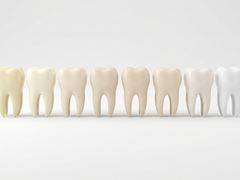 How Many Shades Lighter Can Teeth Whitening Go?We explain in plain language how a shade guide is read, what the change in shade depends on and why no exact number can be given.
 Scale and Polish and Whitening: Can They Be Done on the Same Day?The right order for cleaning and whitening, the time in between and choosing a method according to the type of stain.
Suitability is decided at an examination. Fill in the form or call us to book an appointment.
Last updated: 2026-11-03 · This page is for general information only and does not replace an examination or diagnosis.