

Tartar removal (scaling) means removing hardened plaque with ultrasonic instruments and then polishing the teeth. For most people it takes about 30–60 minutes and is usually recommended every 6–12 months. Done properly, it does not wear away enamel; any temporary sensitivity eases within a few days. At our clinic in Çankaya, Ankara, cleaning is planned together with an examination.
What is tartar removal?
Tartar removal is the cleaning away of hardened plaque deposits on the tooth surface and along the gum line using special instruments. Its clinical name is scaling; many people simply call it a scale and polish.
Tartar (calculus) is bacterial plaque that has hardened with minerals from saliva. It cannot be removed with a toothbrush or floss because it bonds firmly to the tooth surface. That is why it can only be removed by a dentist using the right instruments. We explain how it forms and its signs in detail on our what is tartar page.
The aim of cleaning is not only appearance. Tartar gives the bacteria that fuel gum inflammation a surface to cling to. Regular cleaning is one of the basic steps in keeping your gums healthy.
How is tartar removed?
Tartar removal is usually done in a single session and takes about 30–60 minutes for most people. The time depends on how much tartar there is and the condition of the gums. A typical session involves the following steps:
- Examination: The teeth and gums are checked and X-rays are taken if needed. Gum pocket depths may be measured.
- Ultrasonic scaling: A vibrating tip, cooled with water, breaks the tartar up and lifts it off the surface.
- Hand instrument finishing: Narrow gaps and fine deposits at the gum margin are cleaned with hand instruments.
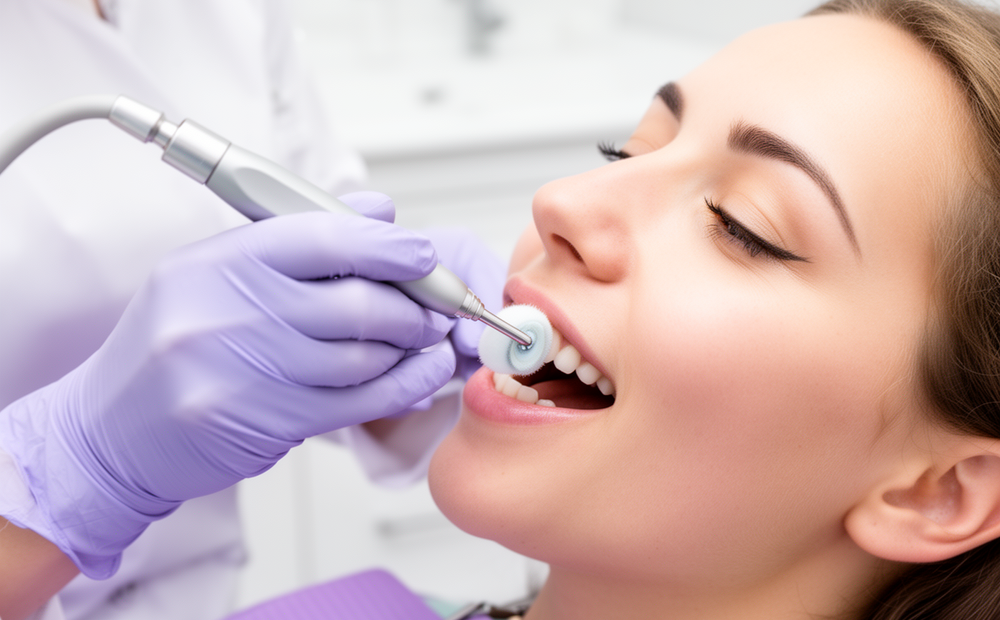
- Polishing: The tooth surface is polished; plaque finds it harder to stick to a smooth surface.
- Air polishing (if needed): A mixture of fine powder, water and air removes surface stains and plaque.
- Advice: Brushing technique and the use of floss and interdental brushes are explained to suit you.

Ultrasonic scaling, polishing and air polishing: the difference
These three procedures are not alternatives to one another; they complement each other. Each targets a different type of deposit.
| Procedure | What does it do? | What does it not remove? |
|---|---|---|
| Ultrasonic scaling | Breaks up hardened tartar with vibration and water. | May not fully remove fine surface discolouration. |
| Polishing | Smooths and polishes the surface with paste and a rubber cup. | Does not remove thick tartar. |
| Air polishing | Removes tea, coffee and tobacco stains with a powder, water and air mixture. | Does not change the tooth's internal colour; it is not whitening. |
Air polishing makes surface cleaning easier, especially for people with heavy smoking, tea and coffee stains. Which procedures you need is decided at the examination.
How often should tartar be removed?
For most people, tartar removal is generally recommended every 6–12 months. The right interval varies from person to person and is decided at the examination.
- Every 6–12 months: People with healthy gums and little tartar build-up.
- Every 3–6 months: People who build up tartar quickly, smokers and those having orthodontic treatment.
- More frequent check-ups: People with a history of gum disease or conditions that affect the gums, such as diabetes.
Where gum pockets are deep, additional treatment such as root surface debridement (curettage) may be needed to clean deposits below the gum line. This differs from a standard clean and is usually planned area by area. How quickly tartar forms depends on the make-up of your saliva, your diet and your oral hygiene habits. So two people may not be advised the same interval. Regular check-ups mean problems are spotted before they grow.
Does tartar removal hurt?
Most people experience tartar removal as vibration, water and light pressure rather than pain. However, the experience varies with the condition of the gums and the sensitivity of the teeth.
If the gums are inflamed, there may be slight bleeding and tenderness during cleaning. Teeth with exposed root surfaces may feel cold water and air more. In that case the water temperature can be adjusted, a desensitising gel can be used or local anaesthetic can be given in the areas that need it.
If you have not had a clean for a long time, the first session may be a little longer and more sensitive; with heavy build-up, cleaning may be split into two sessions. Later regular sessions are usually shorter and more comfortable. If you feel anxious, simply say so at the start of the session; breaks can be taken during the procedure.
Does tartar removal weaken or wear down teeth?
No. Properly performed tartar removal does not wear away enamel or weaken teeth. This is a common myth. The ultrasonic tip breaks up tartar; it does not scrape healthy enamel.
There are a few reasons for this belief:
- Temporary sensitivity: Once surfaces covered by tartar are exposed, there may be sensitivity to cold for a few days. This usually settles on its own.
- Feeling of gaps: Tartar may have filled the spaces between teeth. After cleaning, the tongue notices these spaces for the first time; the gaps are not created by cleaning, they were already there.
- Gum recession: Inflamed, swollen gums heal and tighten after cleaning. In the process the gum may look as if it has receded slightly. What actually causes recession is tartar left uncleaned for a long time and gum disease.
What to watch out for after tartar removal
You can return to your daily routine straight after cleaning. A few simple precautions help the first days go more comfortably.
- Gum tenderness and slight bleeding usually ease within 1–2 days.
- Sensitivity to hot and cold may last a few days; a toothpaste for sensitive teeth can be used.
- Limiting dark-coloured drinks in the first hours after polishing and air polishing protects the surface.
- Do not stop brushing; carry on gently with a soft brush.
- Clean between your teeth daily with floss and interdental brushes.
- If bleeding lasts longer than a week or there is swelling, contact the clinic.
Whitening is usually planned after cleaning. For the timing and order between them, see our tartar removal and whitening page.
Booking tartar removal in Çankaya, Ankara
Tartar removal is planned together with an examination at our clinic in Oran, Çankaya, Ankara. Your teeth and gums are assessed first, and then the cleaning steps and check-up interval that suit you are decided.
The clinic is located in Park Oran Ofis and is open Monday to Saturday, 09:00–19:30. For appointments and directions, use the contact page, or reach us by phone or WhatsApp on 0312 911 60 36.
Frequently asked questions
How long does tartar removal take?
For most people it takes about 30–60 minutes. It may take longer if you have not had a clean for a long time or if your gums are inflamed.
Can I eat after tartar removal?
Yes, you can eat after cleaning. If local anaesthetic was used, waiting until the numbness wears off prevents you biting your lip or cheek.
How many times a year should tartar be removed?
For most people, once or twice a year is enough. More frequent check-ups may be advised for people who build up tartar quickly or have a history of gum disease.
Is gum bleeding normal after tartar removal?
There may be slight bleeding for the first 1–2 days, especially if the gums are inflamed. If bleeding lasts longer than a week, you are advised to contact the clinic.
Does tartar removal whiten teeth?
Cleaning does not lighten the tooth's own colour, but by removing tartar and stains it reveals the natural shade. A lighter shade requires whitening.
Can tartar be removed during pregnancy?
Gum health matters in pregnancy and cleaning can usually be done; the second trimester is often preferred. Timing is decided at the examination, together with the doctor monitoring your pregnancy.
Which department should I go to for tartar removal?
For tartar removal you can see a general dentist. If the gum pockets have deepened, treatment is usually planned within periodontology (the field of gum disease). For the options at state institutions, see our page teeth whitening at a state hospital.
How soon can I smoke after tartar removal?
To let the gums settle and to keep the freshly polished surface from staining, you are advised not to smoke for the first few hours, ideally for 24 hours. Smoking speeds up both staining and tartar build-up. For other questions about aftercare, see our page is tartar removal harmful?.
Related pages
 What Is Tartar? How It Differs from Plaque, Signs and PreventionFind out how tartar forms, what signs it causes and why it affects your gum health.
 Scale and Polish and Whitening: Can They Be Done on the Same Day?The right order for cleaning and whitening, the time in between and choosing a method according to the type of stain.
 How to Remove Smoking, Tea and Coffee Stains from TeethCleaning and polishing for surface stains, whitening for colour that has penetrated the enamel, and practical ways to prevent staining.
 Teeth Whitening in Çankaya and OranWhat you need to know about the whitening methods, first examination and appointment process at our clinic in the Oran area of Çankaya.Why Do Teeth Turn Yellow? Tooth Discolouration and Types of StainsTell external and internal discolouration apart; find out which stains lighten with whitening and which need other treatment.
Suitability is decided at an examination. Fill in the form or call us to book an appointment.
Last updated: 2026-11-04 · This page is for general information only and does not replace an examination or diagnosis.