

Smoking, tea and coffee stains are mostly on the tooth surface and largely come off with professional cleaning, polishing and air polishing. If the stains have penetrated the enamel over the years, whitening may be needed after cleaning. Drinking through a straw, rinsing with water afterwards and regular check-ups reduce new staining. Avoiding these drinks for the first 48 hours after whitening is recommended.
How are smoking, tea and coffee stains removed?
Smoking, tea and coffee stains are mostly on the tooth surface and largely come off with professional cleaning, polishing and air polishing. If a stain has penetrated the enamel over the years, whitening may be needed after cleaning.
Brushing at home slows the build-up of new stains but does not fully remove established ones. Brushing hard or using abrasive powders, on the other hand, can damage enamel.
The right method depends on how deep the stain goes. So the first step is to clean the teeth and see their true colour. After cleaning, the colour is reassessed and together we decide whether whitening is needed. For most people, cleaning alone makes the smile look noticeably fresher.
Why do these stains form?
Smoking, tea and coffee stains form when the coloured substances they contain cling to the thin protein layer on the tooth surface. Because this layer re-forms soon after brushing, staining is an ongoing process.
- Tea: The tannins it contains make it easier for colour compounds to stick to the teeth. Strong tea drunk often can cause noticeable staining.
- Coffee: Its dark pigments settle on the surface; sipping throughout the day prolongs contact time.
- Cigarettes and hookah (shisha): Tar and nicotine leave yellow-brown stains that turn dark brown over time. They also increase tartar build-up and the risk of gum disease.
- Others: Red wine, cola, dark fruit juices and soy sauce also contribute to staining.
Rough surfaces, tartar and the edges of old fillings make it easier for stains to cling. That is why stains are often more noticeable along the gum line and between the teeth.
How effective are cleaning and polishing?
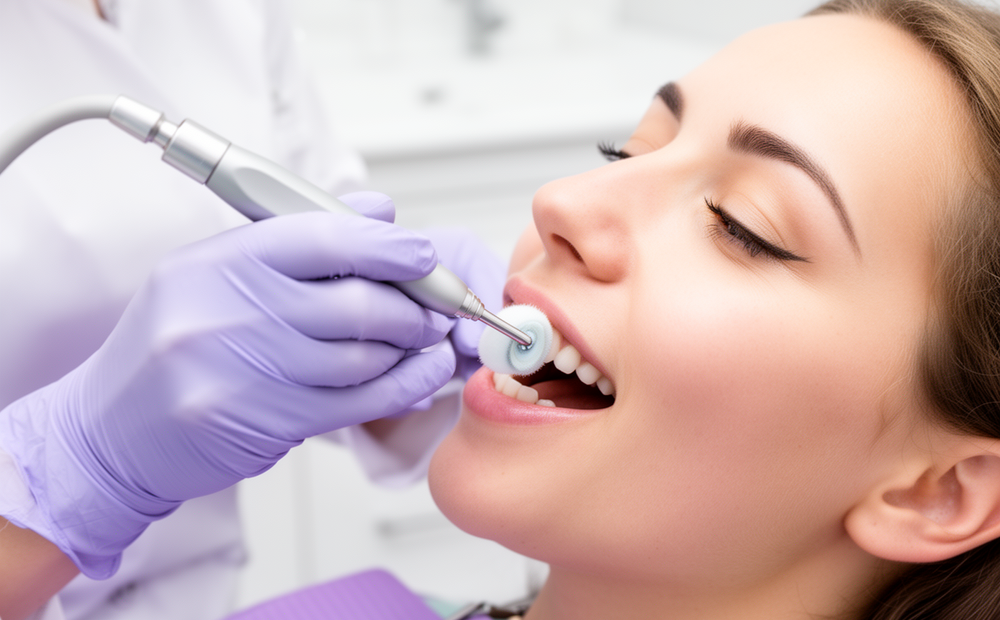
For surface smoking, tea and coffee stains, cleaning and polishing often make a noticeable difference. A session usually includes these steps:
- Tartar and thick deposits are removed with an ultrasonic instrument.
- Air polishing removes stains between the teeth and on the surface.
- Polishing smooths the surface, so new stains find it harder to stick.
These procedures remove only surface build-up without wearing away enamel. For details, see our tartar removal page. After cleaning, the teeth return to their natural colour; however, if the tooth's own colour is dark, whitening comes into consideration.
What is the difference between cleaning and polishing and whitening?
Cleaning and polishing remove the stain on the tooth; whitening lightens the colour within the tooth. The two procedures have different goals and are often planned together.
| Feature | Cleaning and polishing | Whitening |
|---|---|---|
| Target | Surface stains and tartar | Colour in enamel and dentine |
| How does it work? | Removes deposits mechanically | Peroxide oxidises colour molecules |
| Result | The tooth's natural colour is revealed | The tooth's own shade lightens |
| Time | Usually 30–60 minutes | About 45–90 minutes in-office; take-home usually 1–3 weeks |
| When is it enough? | The stains are on the surface | The colour is still dark after cleaning |
For the order and the gap between them, see our tartar removal and whitening page.
When is whitening needed for stains that have penetrated the enamel?
If the teeth still look yellow or brown after cleaning, colour compounds may have penetrated the enamel and dentine. In this case, whitening is a suitable option for lightening the colour.
This is common in people who have smoked for many years or drink a lot of tea and coffee each day. These stains usually respond well to whitening; however, how much the teeth lighten varies from person to person.
For stained teeth, a combined method using both in-office and take-home whitening is sometimes preferred. Which method is suitable is decided at the examination. For other causes of discolouration, see our tooth yellowing and stains page.
Tips to prevent staining
The most effective way to prevent staining is to shorten the time coloured drinks are in contact with your teeth. Simple measures you can use in daily life include:
- Use a straw: Drinking iced tea, iced coffee and cola through a straw reduces contact with the front teeth.
- Rinse with water: Rinsing your mouth with water after tea or coffee reduces how much pigment sticks.
- Limit sipping: Drinking a cup more quickly rather than sipping it for hours shortens contact time.
- Make it weaker: Brewing tea lighter can reduce staining.
- Brushing timing: Brush about 30 minutes after acidic drinks, not straight away.
- Sugar-free gum: Helps natural cleaning by increasing saliva flow.
- Stop smoking: Reduces both staining and the risk of gum disease.
- Regular check-ups: Cleaning and polishing, usually every 6–12 months, prevent build-up.
Can you drink tea and coffee or smoke after whitening?
You are advised to avoid tea, coffee and smoking for the first 48 hours after whitening. During this time the teeth can take up colour compounds more easily.
After the first 48 hours you can return to tea and coffee in moderation. Using a straw, rinsing with water and cutting down on smoking help the result last longer. Depending on lifestyle, the effect of whitening can last about 1–3 years; heavy tea, coffee and tobacco use shortens this time.
We list what you can eat and drink in the first days in detail on our diet and care after whitening page.

What should smokers watch out for?
In people who smoke, gum health needs attention as well as tooth stains. Because smoking narrows the blood vessels in the gums, it can mask bleeding, the most important warning sign of gum disease.
- Regular check-ups are important even if your gums do not bleed.
- Tartar may build up faster; the interval between cleans may be shortened.
- Continuing to smoke after whitening makes the colour darken more quickly.
- If you notice a sore that does not heal, or white or red patches in your mouth, get an examination without delay.
Stopping smoking is an important step towards keeping your teeth's colour. While you are quitting, regular cleaning helps keep stains under control. After stopping smoking, gum bleeding may increase for a while; this may be linked to the blood vessels returning to normal and should be assessed at an examination.
Frequently asked questions
Do smoking stains come off with brushing?
New, light stains may be reduced somewhat by brushing. Established smoking stains need professional cleaning and polishing.
Does tea or coffee stain teeth more?
Both stain. Because of its tannin content, strong tea can cause more noticeable staining than coffee in some people. How often you drink and the contact time also matter.
Does coffee with milk stain less?
Adding milk lightens the colour and, according to some studies, may reduce staining somewhat, but it does not prevent it completely. Rinsing with water and using a straw are still helpful.
Does hookah (shisha) stain teeth?
Yes. Hookah also contains tobacco and tar; like cigarettes, it can leave yellow-brown stains and harm gum health.
Does air polishing damage teeth?
Done with a suitable powder and the right technique, it does not damage enamel. If there are exposed root surfaces or sensitive gums, the dentist chooses a suitable powder and technique.
Related pages
 Scale and Polish in Ankara: Tartar Removal in ÇankayaRemove tartar and protect your gum health with ultrasonic scaling, polishing and air polishing.
 Why Do Teeth Turn Yellow? Tooth Discolouration and Types of StainsTell external and internal discolouration apart; find out which stains lighten with whitening and which need other treatment.
 Scale and Polish and Whitening: Can They Be Done on the Same Day?The right order for cleaning and whitening, the time in between and choosing a method according to the type of stain.
 After Whitening: What Can You Eat and Drink?The white diet for the first 48 hours after whitening, waiting times for coffee, tea and smoking, and an easy checklist.
 Is Teeth Whitening Permanent?How long does the effect of whitening last, why does the colour come back slightly, and what can be done to keep the result for longer?
Suitability is decided at an examination. Fill in the form or call us to book an appointment.
Last updated: 2026-11-03 · This page is for general information only and does not replace an examination or diagnosis.