

On this page we have gathered the most frequently asked questions about teeth whitening and tartar removal, grouped by topic. Below each answer there is a link to the page that covers the topic in detail. Which method suits you, however, can only be decided at an examination.
Whitening methods
How long does light-activated teeth whitening take?
Including preparation and the final check, a session usually takes 45–90 minutes. The number of gel cycles is decided at the examination. Details →
Does light-activated whitening damage teeth?
When carried out on a suitable patient under dental supervision, it is considered not to cause permanent damage to enamel. The most common side effect is temporary sensitivity, which usually passes within 24–72 hours. Details →
Is it the light or the gel that whitens teeth?
It is the gel that whitens the teeth. The light is used to support the gel's activation and its contribution is scientifically debated. Details →
Are laser teeth whitening and light-activated whitening the same?
The procedure is the same; the difference is the light source. In Türkiye, most in-office whitening done with light is called laser whitening, but many clinics use LED light. Details →
Is a laser more effective than LED light?
There is no consistent evidence to support this. With either source, it is the peroxide gel that lightens the colour. Details →
Does laser teeth whitening damage enamel?
When carried out on a suitable patient under dental supervision, it is considered not to cause permanent damage to enamel. Temporary sensitivity is a common side effect. Details →
How many hours is a whitening tray worn?
Depending on the gel, it is worn for 30 minutes to a few hours a day, or overnight if your dentist considers it suitable. Your dentist decides the time. Details →
How many days does take-home whitening take to work?
The first change is often noticeable within a few days. Treatment usually takes 1–3 weeks in total and varies from person to person. Details →
Can I sleep with the tray in?
Some low-concentration gels are suitable for overnight use. This is your dentist's decision; do not use a daytime gel overnight. Details →
How long does combined teeth whitening take?
It is usually completed within 2–3 weeks. The in-office session takes about 45–90 minutes and the take-home part usually lasts 1–2 weeks. Details →
Is in-office or take-home whitening done first?
The most common order is an in-office session first, followed by take-home treatment. However, the order is decided by the dentist for each person. Details →
Does the combined method cause more sensitivity?
Because the two methods are used one after the other, sensitivity may occur. The dentist adjusts the timings and sensitivity usually passes within 24–72 hours. Details →
Which is the most effective teeth whitening method?
There is no single method for everyone. Used for an appropriate length of time, in-office and at-home whitening can give similar results; for stubborn discolouration, the combined method may be preferred. Details →
Does a scale and polish whiten teeth?
It does not change the tooth's own colour, but by removing tartar and surface stains it can make teeth look lighter and brighter. Details →
Do whitening products from the pharmacy work?
Over-the-counter products contain no more than 0.1% hydrogen peroxide and mostly act only on surface stains. They are not expected to noticeably lighten the inner colour of the tooth. Details →
Can a root-filled tooth be whitened?
Yes, if the root canal treatment is successful and the tooth structure is sound enough, its colour can be lightened with internal bleaching. Suitability is decided by examination and X-ray. Details →
How many sessions does internal bleaching take?
In most cases 1–4 sessions are enough, usually 3–7 days apart. The exact number depends on how the tooth responds. Details →
Does internal bleaching damage the tooth?
Although rare, there are risks such as external root resorption and weakening of the tooth. A protective barrier, an appropriate concentration and regular check-ups aim to reduce these risks. Details →
Where is the clinic for teeth whitening in Çankaya?
Our clinic is in the Oran area of Çankaya, at Park Oran Ofis No:70, Kudüs Cd. No:1 D:21. We recommend booking an appointment on 0312 911 60 36 before you come. Details →
Can the examination and whitening be done on the same day?
It may be possible if your oral health is suitable and the schedule allows. If there is decay, gum inflammation or tartar, these are treated first. Details →
How long does in-office whitening take?
An in-office session usually takes 45–90 minutes including preparation. Depending on your needs, an additional session or at-home continuation can be planned. Details →
Sessions, timing and results
How long does a teeth whitening session take?
Including preparation and checks, it usually takes 45–90 minutes. The number and length of cycles are decided after the examination. Details →
Is a scale and polish essential before whitening?
If there is tartar, it is recommended to remove it first; this helps the gel make even contact with the teeth. Cleaning is often done a few days before the session. Details →
Will I feel pain during whitening?
Most people do not feel significant discomfort. Some people may have brief twinges; in that case the time can be shortened. Details →
Can teeth whitening be done in one session?
With in-office whitening, one session is enough for most people. For stubborn discolouration, a second session or at-home top-up may be needed. Details →
How many minutes does teeth whitening take?
An in-office session usually takes 45–90 minutes including preparation and checks. Details →
How many days does at-home whitening take?
It usually takes 1–3 weeks. The daily wear time is set by the dentist according to the type of gel. Details →
How many shades lighter does one whitening session make teeth?
No exact number can be given. On a guide arranged by brightness, most people see a lightening of a few steps; the result varies from person to person. Details →
Why did the colour darken a little after whitening?
Teeth lose water during treatment and temporarily look whiter. As they regain moisture, the colour comes back somewhat; the true shade settles within 1–2 weeks. Details →
On a shade guide, is A1 or B1 lighter?
In the brightness order, B1 is generally considered the lightest shade; A1 is very close to it. Details →
Does teeth whitening last a lifetime?
No. Depending on lifestyle, the result is usually maintained for about 1–3 years and can be refreshed with a top-up when needed. Details →
Why did my teeth darken a little after whitening?
In the first few days, the tooth takes back the water it lost during whitening and the colour darkens slightly. This is the rebound effect and it is normal. Details →
How often should a top-up be done?
The frequency varies from person to person. When you notice a change in colour, a few nights of at-home treatment after a short check-up is usually enough. Details →
Is one-day teeth whitening possible?
Lightening the tooth's own colour on the same day is possible with in-office whitening at a clinic. The degree of lightening varies from person to person, and in some cases an extra session or at-home whitening may be needed. Details →
Do instant whitening toothpastes really whiten?
Toothpastes with blue pigment do not whiten the tooth; they create an optical effect that temporarily makes yellowness less noticeable. This effect usually disappears within a few hours. Details →
Are tooth polish or white coating products harmful?
Temporary coating products generally do not change the colour of the tooth and wear off quickly. Products with unclear ingredients can irritate the gums; read the label before use. Details →
Home methods and products
Are teeth whitening strips harmful?
Strips within the legal limit usually do no serious harm when used as directed, but their effect is limited. Gum irritation and sensitivity can occur; if you have decay or gum disease, you need an examination first. Details →
Can whitening toothpaste be used every day?
Low-abrasion toothpastes can be used daily. Using highly abrasive products for a long time with hard brushing can thin the enamel; choose a soft brush. Details →
How many shades lighter does home whitening make teeth?
With over-the-counter products the change is usually mild and mostly comes from reduced surface stains. With dentist-supervised take-home whitening the result is more noticeable and varies from person to person. Details →
How many days do teeth whitening strips take to work?
It depends on the product and the type of stain on the teeth. With over-the-counter strips the change is usually mild and mostly comes from a reduction in surface stains. Details →
Do whitening strips damage enamel?
Strips within the legal limit are not expected to seriously damage enamel when used according to the instructions. Acidic products, products of unknown concentration and overuse, however, can pose a risk. Details →
What should I do if I get sensitivity while using whitening strips?
Take a break and use a fluoride toothpaste made for sensitive teeth. If the sensitivity does not settle within a few days, see your dentist. Details →
Can whitening toothpaste be used every day?
Low-abrasion whitening toothpastes containing fluoride can generally be used every day. Using highly abrasive products for a long time with hard brushing can thin the enamel. Details →
How long does whitening toothpaste take to work?
A slight reduction in surface stains may be noticed within a few weeks; the effect of optical toothpastes is visible straight after brushing but is short-lived. The tooth's own colour is not noticeably lightened by toothpaste. Details →
Does whitening toothpaste cause sensitivity?
Some people may experience sensitivity, especially if they have gum recession or enamel wear. In that case it is advisable to switch to a toothpaste made for sensitive teeth and consult a dentist. Details →
How many days does at-home LED teeth whitening take to work?
It depends on the product. Because the gel strength in over-the-counter kits is low, the change is usually mild and mostly comes from a reduction in surface stains. Details →
Does LED light damage teeth?
There is no widespread evidence that the LED light used at home itself damages teeth. The risks come mainly from the gel strength, a poorly fitting mouthpiece and use without an examination. Details →
Will teeth whiten if the LED device is used without gel?
No. Light on its own has no whitening effect; it is the peroxide in the gel that lightens the colour. Details →
How many days does it take to whiten teeth naturally?
Because there is no evidence that natural methods lighten the tooth's own colour, it is not possible to give a timeframe. The shine people notice usually comes from surface stains being worn away. Details →
Is whitening teeth with lemon harmful?
Yes. Lemon juice is acidic and, when rubbed on the teeth, can soften the enamel and lead to erosion. Worn enamel does not grow back, and teeth may look more yellow over time. Details →
Does banana peel harm teeth?
Banana peel generally does no harm, but it has not been shown to whiten teeth either. It is enough to brush away the sugary residue after use. Details →
How many days does baking soda take to whiten teeth?
Because baking soda does not lighten the tooth's own colour, no whitening should be expected over any particular time. A slight feeling of brightness usually comes from reduced surface stains. Details →
Does a baking soda and lemon mixture harm teeth?
Yes, it can. The acid in lemon softens enamel, and brushing with baking soda on top increases wear. Using this mixture is not recommended. Details →
Can activated charcoal toothpaste be used?
There is not enough evidence for a whitening effect, and its abrasiveness varies by product. If you use it, do not use it instead of your main toothpaste, and keep brushing with a fluoride toothpaste. Details →
How much hydrogen peroxide is 10% carbamide peroxide equal to?
It is equal to about 3.5% hydrogen peroxide. Carbamide peroxide releases hydrogen peroxide equal to about a third of its weight. Details →
Can you whiten teeth with hydrogen peroxide from the chemist?
This is not recommended. These products are not made for teeth whitening; uncontrolled use can cause gum irritation and sensitivity. Whitening should be done with products made for the purpose and under dental supervision. Details →
Does hydrogen peroxide dissolve enamel?
Used within legal limits and correctly, it does not dissolve enamel. It works by oxidising colour molecules; temporary surface changes are restored by saliva. Details →
Safety and sensitivity
Does teeth whitening thin enamel?
Whitening carried out under a dentist's supervision and for the recommended times does not thin enamel. Slight changes that may be seen on the surface usually recover with saliva and fluoride. Details →
Does teeth whitening cause decay?
No, whitening does not cause decay. However, any untreated decay needs to be treated first. Details →
How many times can teeth be whitened?
The frequency is decided individually. After the first treatment, short top-ups over the years are usually enough; frequent, uncontrolled repetition is not recommended. Details →
Is anaesthetic used during teeth whitening?
It is usually not needed; whitening is applied to the surface of the tooth. Anaesthetic is not preferred in most cases, as it could stop you noticing twinges. Details →
How long does sensitivity last after whitening?
It usually passes within 24–72 hours. If there is longer-lasting or throbbing pain, you should see your dentist. Details →
I have sensitive teeth – can I have whitening?
In most cases yes, but the cause of the sensitivity is assessed first. Comfort can be improved with desensitising products and choosing a suitable method. Details →
Is sensitivity after whitening normal?
Yes, it is the most common side effect and usually passes within 24–72 hours. It does not indicate permanent damage. Details →
When should I start using a desensitising toothpaste?
Some dentists recommend starting 1–2 weeks before whitening and continuing for a few days afterwards. Your dentist will decide the right plan for you. Details →
Can I continue at-home whitening while my teeth are sensitive?
With mild sensitivity you can continue with shorter wear times; with marked sensitivity it is advisable to take a break for a day or two and consult your dentist. Details →
Does tooth sensitivity go away on its own?
Temporary sensitivity after dental procedures usually goes away on its own. Sensitivity caused by exposed dentine, however, generally continues unless the cause is dealt with. Details →
How long does sensitivity toothpaste take to work?
The effect usually becomes noticeable after a few weeks of regular use. If you stop using it, the sensitivity may come back. Details →
Why does my tooth twinge when I drink cold water?
The tubules in exposed dentine pass the cold on to the nerve. Gum recession, enamel wear or decay are the main causes. Details →
Can someone with gum recession have whitening?
In most cases they can, but exposed root areas should be protected. The root surface does not whiten and sensitivity may increase. Details →
Can teeth with fillings be whitened?
The natural tooth tissue whitens, but the filling does not change colour. Replacement of fillings on the front teeth can be planned after whitening. Details →
Can I have whitening if I have decay?
The decay needs to be treated first. With untreated decay, the gel can reach the inside of the tooth and cause pain. Details →
Can teeth whitening during pregnancy harm the baby?
There is no evidence that it causes harm; however, as there is also not enough data showing it is safe, it is not recommended during this time. Details →
Can tartar be removed during pregnancy?
Yes, scaling is considered safe in pregnancy and helps reduce gum inflammation. Many dentists find the second trimester more comfortable. Details →
Can I use whitening strips while breastfeeding?
As safety data is also insufficient for the breastfeeding period, postponing whitening strips and gels is recommended. Details →
Can teeth be whitened at 16?
Cosmetic whitening is planned after the age of 18. For under-18s, options such as scale and polish can be considered for surface stains. Details →
Is there an upper age limit for teeth whitening?
No, there is no upper age limit. Suitability is determined by assessing gum health, root surfaces and restorations. Details →
Can young people use whitening toothpaste?
Over-the-counter toothpastes generally clean surface stains. As frequent use of abrasive products can damage enamel, it is advisable to consult a dentist. Details →
Can zirconia crowns be whitened?
No. The colour of zirconia and porcelain crowns does not change with whitening gel. Surface stains can be reduced with cleaning and polishing; for a lighter colour, the crown needs to be replaced. Details →
When are fillings replaced after whitening?
There is usually a wait of about 2 weeks. During this time the colour stabilises and adhesive bonding strength returns to normal. The exact time is decided at the examination. Details →
Will my composite fillings look darker after whitening?
They may. The natural teeth lighten while the filling stays the same colour. That is why fillings on the front teeth are often replaced to match the new shade after whitening. Details →
After whitening and stains
When can I drink coffee after whitening?
A wait of at least 48 hours is generally recommended. After that, choosing coffee with milk and rinsing with water slows down staining. Details →
Can I smoke after whitening?
It is recommended that you do not smoke for at least 48 hours, and longer if possible. Smoking is one of the fastest causes of whitening results darkening. Details →
Can I drink tea after whitening?
It is recommended to avoid tea for the first 48 hours. After that, choosing weakly brewed tea and rinsing with water helps. Details →
Which drink stains teeth the most?
Tea, coffee and red wine are the drinks that most often cause staining. Which one stains more varies from person to person, depending on how often it is consumed, how strong it is and how long it stays in contact with the teeth. Details →
Do apples and carrots whiten teeth?
No, they do not whiten teeth. But because chewing increases saliva flow, they help the mouth clean itself and can slightly reduce the build-up of new stains. Details →
Does white wine stain teeth?
White wine is light in colour, but because it is acidic it can soften enamel. This can make it easier for other drinks such as tea or coffee to leave stains. Details →
Does tooth yellowing go away?
It depends on the cause. Surface stains lessen with cleaning, and the tooth's own yellow colour can be lightened with whitening. Some internal discolouration needs other treatments. Details →
I have a brown stain on my tooth – is it decay?
It could be, but not every brown stain is decay. Tea, coffee, smoking and tartar also cause brown stains. The distinction is made at the examination. Details →
What causes black lines on the teeth?
Thin black lines along the gum line are often caused by pigment-producing bacteria and are seen especially in children. They are removed with professional cleaning but may come back. Details →
Do smoking stains come off with brushing?
New, light stains may be reduced somewhat by brushing. Established smoking stains need professional cleaning and polishing. Details →
Does tea or coffee stain teeth more?
Both stain. Because of its tannin content, strong tea can cause more noticeable staining than coffee in some people. How often you drink and the contact time also matter. Details →
Does coffee with milk stain less?
Adding milk lightens the colour and, according to some studies, may reduce staining somewhat, but it does not prevent it completely. Rinsing with water and using a straw are still helpful. Details →
Tartar and oral health
How long does tartar removal take?
For most people it takes about 30–60 minutes. It may take longer if you have not had a clean for a long time or if your gums are inflamed. Details →
Can I eat after tartar removal?
Yes, you can eat after cleaning. If local anaesthetic was used, waiting until the numbness wears off prevents you biting your lip or cheek. Details →
How many times a year should tartar be removed?
For most people, once or twice a year is enough. More frequent check-ups may be advised for people who build up tartar quickly or have a history of gum disease. Details →
Does tartar fall off on its own?
Sometimes small pieces may break off, but most tartar stays on the tooth surface. It needs to be removed regularly at the clinic. Details →
Why does tartar form faster in some people?
The mineral content of saliva, oral care habits, diet, smoking and the alignment of the teeth all affect how fast it forms. That is why it varies from person to person. Details →
Does tartar loosen teeth?
Tartar alone does not loosen a tooth, but if the gum disease it causes progresses, the bone holding the tooth can be lost and the tooth can become loose. Details →
Does tartar removal make teeth sensitive?
There may be sensitivity to cold for a few days after cleaning. This is usually temporary and does not mean permanent damage. Details →
Does tartar removal open gaps between teeth?
Cleaning does not create gaps; once the spaces filled by tartar and the swollen gums are gone, gaps that were already there become visible. Details →
When can I eat after tartar removal?
If no local anaesthetic was used, you can usually eat straight away. If it was, you are advised to wait until the numbness in your lips and tongue wears off. Details →
Is black tartar dangerous?
Black tartar is not an emergency in itself, but it is often a sign of gum disease. It is advisable to have it examined and removed without delay. Details →
Can black tartar be brushed off?
No. Black tartar is a hardened deposit that clings firmly to the tooth. It can only be removed at the clinic with special instruments. Details →
Does removing black tartar hurt?
Cleaning tartar above the gum usually causes only mild discomfort. For cleaning below the gum, local anaesthetic can be used for comfort; how much discomfort people feel varies from person to person. Details →
Is a scale and polish essential before whitening?
If there is tartar or noticeable plaque, yes. Deposits stop the gel making contact with the tooth and can make the result patchy. If there is no tartar, polishing alone may be enough. Details →
How many days after cleaning can whitening be done?
Usually a few days to 1–2 weeks later. If the gums are healthy, it can be planned on the same day; the exact time is decided at the examination. Details →
Can whitening be done first and the scale and polish afterwards?
This is generally not recommended. Whitening done while tartar and plaque are present can give a patchy result and irritate the gums more. Details →
Why won't my bad breath go away?
A smell that persists despite brushing is usually caused by tongue coating, tartar or gum disease. Unless these causes are treated at the clinic, the smell generally continues. Details →
Does tartar removal cure bad breath?
If the smell comes from tartar and gum inflammation, it often decreases noticeably after cleaning. For a lasting result, daily care needs to continue. Details →
Is my bad breath coming from my stomach?
The stomach and reflux can cause bad breath in some people, but the source is usually the mouth. If no cause in the mouth is found at the dental examination, seeing an internal medicine doctor is recommended. Details →
Do bleeding gums stop on their own?
Slight bleeding caused by brushing too hard or starting to floss may lessen within a few days. Bleeding caused by tartar, however, usually does not stop completely until it is cleaned. Details →
Should I stop brushing if my gums bleed?
No. Stopping brushing increases plaque and prolongs the inflammation. Keep brushing gently with a soft brush and cleaning between your teeth. Details →
Which department should I go to for bleeding gums?
You can see a general dentist first. If gum disease has progressed, treatment is usually planned within periodontology (the field of gum disease). Details →
Braces and clear aligners
Can teeth be whitened while wearing braces?
It is not usually recommended. Because the area under the brackets does not come into contact with the gel, a colour difference may appear when the braces come off. Whitening is usually planned after treatment ends. Details →
How many days after braces come off can I whiten my teeth?
There is no fixed period. Your dentist decides the waiting time based on the condition of the enamel surface, the gums and any white spots. Details →
Why do teeth look yellow after braces?
Plaque collecting around the brackets, coloured foods and adhesive residue can make teeth look duller or more yellow. The colour is reassessed after cleaning and polishing. Details →
Do white spots after braces go away on their own?
Some superficial spots may fade somewhat in the first months, but most do not disappear completely. For permanent spots, treatment options are assessed at an examination. Details →
How long should I wait with white spots?
There is no fixed period. Spots are usually monitored for a while; your dentist decides when to treat them based on their depth and how they change. Details →
Does ICON treatment work on white spots from braces?
Resin infiltration, known as ICON treatment, is often used for superficial and medium-depth spots after braces. Results may be limited for deep spots. Details →
Can I use whitening gel with my clear aligners?
Only if your dentist recommends it and in the way they specify. Putting gel in your treatment aligner on your own is not recommended. Details →
Do attachments whiten?
No. Attachments are made of composite material and do not change colour with whitening. They are removed at the end of treatment and the surface is polished. Details →
Can I drink coffee while wearing clear aligners?
It is not recommended. Coffee can stay between the aligner and the tooth and stain both. It is better to take the aligner out to drink and then rinse your mouth. Details →
Does tartar removal damage brackets?
Cleaning done carefully and with the right technique does not damage brackets. If a loose bracket is noticed, which is rare, your orthodontist is informed. Details →
Does tartar removal hurt while wearing braces?
Most people feel only mild discomfort. If the gums are inflamed, tenderness and bleeding may be more noticeable; this varies from person to person. Details →
Can I use an electric toothbrush with braces?
Yes, you can. It is recommended to guide it carefully around the brackets and to use it together with interdental brushes and dental floss. Details →
Fees, insurance and practical information
How much does teeth whitening cost?
Our fees are based on the TDB Minimum Fee Schedule. The exact fee is confirmed once the method, number of sessions and any prior treatment needed have been determined at the examination. Details →
Can I find out the cost of teeth whitening over the phone?
We can give general information over the phone, but the exact fee cannot be set without an examination. Conditions that change the fee, such as tartar, decay or gum problems, can only be seen at the examination. Details →
Do in-office and at-home whitening cost the same?
No. Because the methods differ in chair time, materials and follow-up needs, the fee also differs. The method that suits you is decided at the examination. Details →
Does supplementary health insurance cover dental care?
Standard supplementary health insurance in Turkey generally does not cover dental treatment. Additional dental cover or a dental package needs to be taken out. Details →
Does private health insurance cover teeth whitening?
Some dental packages may include whitening, but many exclude it as a cosmetic procedure. You can get definitive information from your policy or your insurance company. Details →
Is scaling covered by insurance?
Scaling is often included in policies with a dental package. The cap on the number of treatments, the limit and the waiting period vary by policy. Details →
Is teeth whitening done at state hospitals?
Because whitening is considered a cosmetic procedure, it is generally not offered at state hospitals and ADSMs in Turkey. It is advisable to check the current situation with the institution concerned. Details →
Does SGK pay for teeth whitening?
SGK generally does not cover cosmetic teeth whitening. Scaling, however, is done at state hospitals and ADSMs under SGK cover. Details →
Is scaling done in the state system?
Yes, scaling (removal of tartar) is done at state hospitals and ADSMs under SGK cover. You can book an appointment through MHRS. Details →
Does a dental filling break the fast?
According to Diyanet's statements, the fast is not broken simply because of dental treatment. However, if water or a substance used in the treatment goes down the throat during treatment, the fast is broken and must be made up. Details →
Does an injection at the dentist break the fast?
According to Diyanet's statements, an injection given to numb the area does not break the fast, as it is not intended as nourishment. Details →
Can I have scaling while fasting?
According to Diyanet's statements, the treatment itself does not break the fast, but because water is used in the procedure there is a chance of water going down the throat. For this reason, many people prefer to plan cleaning for after iftar. Details →
Does teeth whitening permanently damage enamel?
Whitening carried out under a dentist's supervision at a suitable concentration does not permanently damage enamel. Temporary sensitivity may occur and usually passes within 24–72 hours. Details →
Is whitening teeth with baking soda harmful?
Baking soda is abrasive; when used frequently and vigorously, it can wear away enamel. It only reduces surface stains and does not lighten the tooth's own colour. Details →
Is laser whitening more effective than whitening without light?
The effect comes mainly from the peroxide in the gel. The additional contribution of light or laser is debated in scientific studies; at-home whitening is done without light. Details →
What is the difference between hydrogen peroxide and carbamide peroxide?
Carbamide peroxide releases hydrogen peroxide equal to about one third of its weight and acts more slowly. For this reason it is mostly used in at-home whitening, while hydrogen peroxide is used at the clinic. Details →
Are scaling and root planing (curettage) the same thing?
No. Scaling is the removal of tartar from the tooth surface; root planing (curettage) is the removal of tartar and inflamed tissue from inside the gum pocket and is carried out for gum disease. Details →
Does the rebound effect mean whitening has failed?
No. Rebound is the slight return of the shade as teeth that lost water during the session rehydrate, and it is expected. The true result is usually assessed after 1–2 weeks. Details →
Cosmetic treatments
Are ICON treatment and resin infiltration the same thing?
Yes. ICON treatment is the popular name for resin infiltration; both describe filling the pores in white spots with a flowable resin. Details →
Does white spot treatment hurt?
Because no tooth tissue is drilled away, there is usually no pain, and in most cases no anaesthetic is needed. Details →
Is resin infiltration permanent?
Because the resin penetrates the tooth structure, it lasts a long time. Good oral hygiene and regular check-ups help maintain the result. Details →
Are teeth filed down for porcelain veneers?
In most cases only minimal preparation is done; in some cases no preparation is needed at all. This is decided at the examination. Details →
Do porcelain veneers hurt?
Local anaesthetic may be used for comfort during preparation. Mild sensitivity after the procedure usually passes within a few days. Details →
Can veneers be whitened?
No. The colour of porcelain does not change with whitening; if you want a whiter shade, whitening is planned before the veneers. Details →
How long does gummy smile Botox last?
The effect usually starts within 3–7 days, becomes noticeable at about 2 weeks and lasts 3–6 months on average. It can be repeated if you wish. Details →
Does gum contouring hurt?
The procedure is done under local anaesthetic. Mild tenderness may last a few days afterwards. Details →
Will the gum grow back?
With properly planned gum contouring, the result is usually permanent. If the bone is too close to the tooth, crown lengthening may be needed; if there is gum overgrowth, the underlying cause is also addressed. Details →
Does teeth clenching go away completely?
It depends on the cause. In most cases, even if it does not go away completely, a night guard and changes in habits protect the teeth and reduce symptoms. Details →
How long is a night guard used for?
It is usually worn every night while sleeping. How long it is used and when it is replaced are decided by the dentist. Details →
Do ready-made guards from the pharmacy work?
Ready-made guards may not fit the mouth properly and can strain the jaw joint. A custom guard made from impressions is recommended. Details →
Frequently asked questions
How long does light-activated teeth whitening take?
Including preparation and the final check, a session usually takes 45–90 minutes. The number of gel cycles is decided at the examination.
How long does a teeth whitening session take?
Including preparation and checks, it usually takes 45–90 minutes. The number and length of cycles are decided after the examination.
Are teeth whitening strips harmful?
Strips within the legal limit usually do no serious harm when used as directed, but their effect is limited. Gum irritation and sensitivity can occur; if you have decay or gum disease, you need an examination first.
Does teeth whitening thin enamel?
Whitening carried out under a dentist's supervision and for the recommended times does not thin enamel. Slight changes that may be seen on the surface usually recover with saliva and fluoride.
When can I drink coffee after whitening?
A wait of at least 48 hours is generally recommended. After that, choosing coffee with milk and rinsing with water slows down staining.
How long does tartar removal take?
For most people it takes about 30–60 minutes. It may take longer if you have not had a clean for a long time or if your gums are inflamed.
Can teeth be whitened while wearing braces?
It is not usually recommended. Because the area under the brackets does not come into contact with the gel, a colour difference may appear when the braces come off. Whitening is usually planned after treatment ends.
How much does teeth whitening cost?
Our fees are based on the TDB Minimum Fee Schedule. The exact fee is confirmed once the method, number of sessions and any prior treatment needed have been determined at the examination.
Are ICON treatment and resin infiltration the same thing?
Yes. ICON treatment is the popular name for resin infiltration; both describe filling the pores in white spots with a flowable resin.
Does light-activated whitening damage teeth?
When carried out on a suitable patient under dental supervision, it is considered not to cause permanent damage to enamel. The most common side effect is temporary sensitivity, which usually passes within 24–72 hours.
Related pages
 Teeth Whitening Methods: Which One Suits You?Compare in-office, at-home, combined and internal whitening, pharmacy products and scale and polish side by side using the same criteria.
 Common Misconceptions About Teeth WhiteningDoes it thin enamel, is it permanent, does baking soda work? We explain teeth whitening myths and facts in plain language.
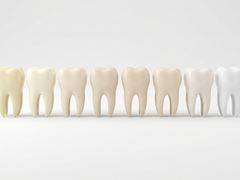 Glossary of Teeth Whitening and Dental CleaningShort, plain explanations of terms you may hear at your examination: from peroxide to polishing, from enamel to resin infiltration.
 After Whitening: What Can You Eat and Drink?The white diet for the first 48 hours after whitening, waiting times for coffee, tea and smoking, and an easy checklist.
Suitability is decided at an examination. Fill in the form or call us to book an appointment.
Last updated: 2026-11-04 · This page is for general information only and does not replace an examination or diagnosis.