
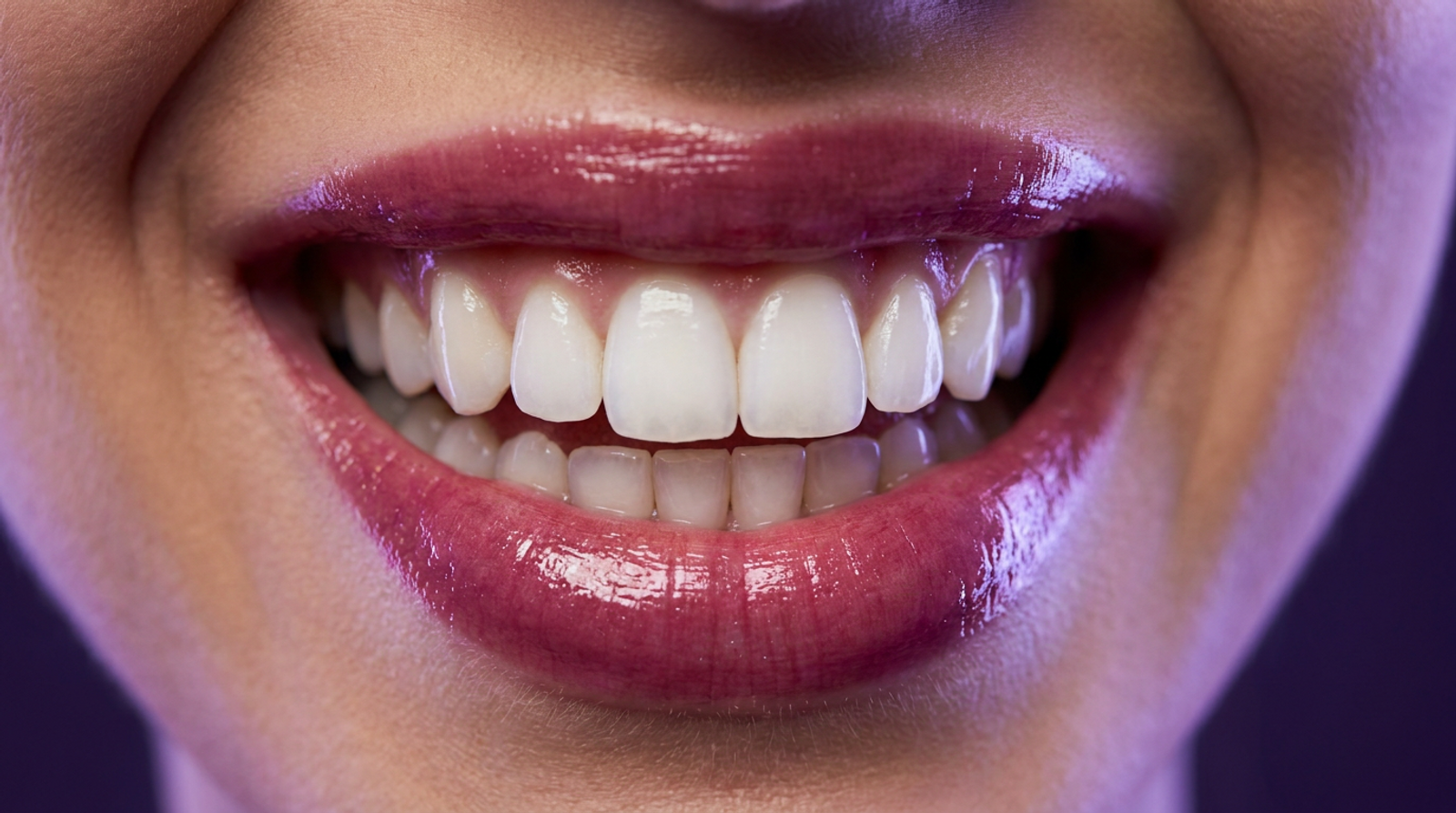
Lightening the tooth's own colour on the same day is only possible with in-office whitening carried out by a dentist at the clinic; a session takes about 45–90 minutes and the degree of lightening varies from person to person. Some over-the-counter products that claim to “whiten instantly” do not whiten the tooth at all; they temporarily coat the surface or create an optical effect, such as with blue pigment. For surface stains, a scale and polish done on the same day can also make a noticeable difference.
Is instant teeth whitening possible?
Instant teeth whitening is partly possible, depending on what is meant. Lightening the tooth's own colour on the same day is possible with in-office whitening at a clinic; there is, however, no product that gives lasting whiteness at home in a few minutes.
The words “instant” or “in one day” usually refer to three different things:
- Optical or coating products: Change how the tooth looks for a few hours or a day, without lightening its colour.
- Scaling and polishing: Removes surface stains and reveals the tooth's own colour.
- In-office whitening: Lightens the tooth's own colour in a single session at the clinic.
Below we look at each of these three options separately and objectively.
What do “instant whitening” products do?
Some over-the-counter “instant whitening” products temporarily coat the surface or create an optical effect instead of whitening the tooth. The effect usually disappears within a few hours with eating, drinking and brushing.
- Products with blue pigment: Leave a thin blue-violet layer on the tooth surface. Because blue visually counterbalances yellow, the teeth look whiter; but the colour of the tooth does not change.
- White coating or “tooth polish” products: A paint-like white layer is applied to the tooth surface. The look can be artificial and the layer wears off quickly.
- Hard powders and abrasive products: Can rub away surface stains quickly, but can also wear the enamel. Worn enamel does not grow back.
Over-the-counter products contain no more than 0.1% hydrogen peroxide. This level is not enough to noticeably lighten the colour of teeth in a short time. For details on these product groups, see the whitening toothpaste, pens and powders page.
How much lighter can a single in-office session make teeth on the same day?
With in-office whitening, the tooth's own colour is lightened on the same day in a single session; however, how much lighter it becomes varies from person to person and is assessed at the examination. A session usually takes about 45–90 minutes.
In this method the gums are covered with a protective barrier and a whitening gel is applied to the teeth by the dentist. The gel is often used together with a blue-violet LED light. In Turkey this is also popularly called “laser whitening”. It is the gel that actually produces the effect; the contribution of the light is debated.
The main factors affecting the result are:
- The starting colour of the tooth and the type of discolouration (yellow shades usually respond better than grey shades)
- Enamel thickness and age
- Whether there is tartar, decay or fillings on the teeth
- A tendency to sensitivity
Some people may need more than one session, or a combined method together with at-home whitening, to reach the desired shade. We describe how a session goes step by step on the whitening session page.

Why do teeth look whiter in the first days after a session?
Straight after whitening, teeth may look slightly whiter than the real result. This is because the teeth lose water during the procedure (dehydration).
As the teeth take up water again from saliva over a few days, the colour darkens slightly and settles at its lasting shade. This is called the “rebound” effect and is normal. That is why it is usually recommended to wait a few days before judging the result.
During this period teeth may be more prone to staining. Avoiding tea, coffee, cola, red wine and smoking in the first days helps protect the result. For realistic expectations of how many shades lighter teeth can become, see the how many shades does teeth whitening lighten page.

Does a scale and polish make a difference on the same day?
Yes. If a large part of the darkness of your teeth comes from tartar and surface stains, a scale and polish done on the same day can make a noticeable difference. This procedure does not lighten the tooth's own colour, but it reveals the colour that was hidden.
Tea, coffee and tobacco stains build up especially between the teeth and along the gum line. Tartar is removed with ultrasonic instruments, and the surface is then smoothed by polishing.
Cleaning is also the first step of whitening; tartar and plaque stop the gel from reaching the tooth surface evenly. Whether both can be done on the same day depends on the condition of the gums. For details, you can read the scaling and whitening page.
Optical products, cleaning and in-office whitening compared
The table below objectively compares the routes people take for an “instant” result.
| Feature | Optical / coating product | Scale and polish | In-office whitening |
|---|---|---|---|
| Does it lighten the tooth's own colour? | No | No; it removes stains | Yes |
| When the effect starts | Immediately | Same day | Same day |
| How long the effect lasts | A few hours to a day | Until new stains build up | About 1–3 years, depending on lifestyle |
| Examination beforehand | No | Yes | Yes |
| Main risk | Artificial look; enamel loss with abrasive products | Temporary sensitivity | Temporary sensitivity (usually settles within 24–72 hours) |
| Applied by | The person themselves | A dentist | A dentist |
Which colours do not lighten in a single day?
Some colour problems cannot be fully corrected either with instant products or with whitening. In these cases a different treatment plan may be needed.
- Fillings, crowns and veneers: Do not change colour with whitening. As the natural teeth lighten, the colour difference may become more noticeable; details are on the do crowns and fillings whiten page.
- A single darkened tooth with root canal treatment: Usually needs internal (single-tooth) whitening, which may take several visits.
- Grey-brown bands caused by medication: May respond slowly and to a limited extent to whitening.
- White spots: Whitening can make these spots more noticeable at first; the spot needs to be assessed first.
How to plan before an important day
Before an important day such as a wedding, engagement or photo shoot, it is safer not to leave whitening until the last day. Planning a few weeks ahead allows time both for any prior treatment and for the colour to settle.
- Examination: Decay, gum problems and old fillings are checked; the suitable method is decided.
- Prior treatment if needed: Scaling, treatment of decay or gum treatment is done first.
- Whitening: The in-office, at-home or combined method is applied.
- Waiting: A few days are allowed for the colour to settle and for any sensitivity to pass.
- Adjustment if needed: The colour match of fillings on the front teeth is assessed.
Frequently asked questions
Is one-day teeth whitening possible?
Lightening the tooth's own colour on the same day is possible with in-office whitening at a clinic. The degree of lightening varies from person to person, and in some cases an extra session or at-home whitening may be needed.
Do instant whitening toothpastes really whiten?
Toothpastes with blue pigment do not whiten the tooth; they create an optical effect that temporarily makes yellowness less noticeable. This effect usually disappears within a few hours.
Are tooth polish or white coating products harmful?
Temporary coating products generally do not change the colour of the tooth and wear off quickly. Products with unclear ingredients can irritate the gums; read the label before use.
Why do my teeth look very white straight after in-office whitening?
Because the teeth lose water during the procedure, they look whiter in the first days. As they take up water again from saliva, the colour darkens slightly and settles at its lasting shade.
Does scaling whiten teeth?
Scaling does not lighten the tooth's own colour, but by removing tartar and surface stains it can make teeth look lighter. Cleaning is also usually done before whitening.
Related pages
 Light-Activated Teeth Whitening (In-Office)A single-appointment treatment carried out in the clinic under a dentist's supervision, using blue-violet light, whitening gel and a gum barrier.
 How Is Teeth Whitening Done? The Session Step by StepFind out what happens, in order, during an in-office whitening session – from the examination to the final check – and what to look out for afterwards.
 How Many Shades Lighter Can Teeth Whitening Go?We explain in plain language how a shade guide is read, what the change in shade depends on and why no exact number can be given.
 Whitening Toothpaste, Pens, Powders and Gels: What Do They Do and Not Do?Learn the real effect of over-the-counter whitening products, the risk of abrasion and what to look for to choose wisely.
 Scale and Polish and Whitening: Can They Be Done on the Same Day?The right order for cleaning and whitening, the time in between and choosing a method according to the type of stain.
Suitability is decided at an examination. Fill in the form or call us to book an appointment.
Last updated: 2026-11-04 · This page is for general information only and does not replace an examination or diagnosis.